Brain & Memory
How to Get Rid of Brain Fog: Causes, Tests and Steps That Help
Brain fog is a symptom of something else, so it usually clears once you fix the cause. Start with seven…
By Maya Ellison · Oct 27, 2026
Found a supplement through an ad or a video? We take it apart slowly: what the label lists, how each dose compares with human studies, who should pass on it, and what the checkout really costs. No scores, no hype.
Each ingredient, its form and its amount per serving, plus any blend that keeps the amounts hidden.
The label dose set beside the doses tested in human trials, with NIH ODS, NCCIH and PubMed links.
Known side effects, medicine interactions and the groups who should check with a clinician first.
Price per day, bundle math, shipping, upsells, subscriptions and the steps to get a refund.
Reviews and guides filed by health goal.
Six checks that take ten minutes and can save you the price of a six-bottle bundle.
An ad can run for ten minutes without showing the Supplement Facts panel. Find it before you pay. Then check each dose against one full serving, which the FDA defines as the most the directions suggest at one time.
The FTC says a free trial usually asks for your card number so the company can bill you if you miss the deadline. Read how long the trial lasts and how to cancel, then set a reminder.
The FTC warns that a pre-checked box can let a company keep charging you, add more products you must pay for, or share your details. Look over the whole order form and uncheck anything you did not choose.
ClickBank orders show as CLKBANK* on your statement. ClickBank says most products have a sixty day refund period, and the refund option disappears once it ends. Keep the confirmation email where you can find it.
NIH asks you to tell your health care providers about every supplement you take. Some herbs interact with medicines. NCCIH says St. John’s wort can weaken birth control pills, warfarin and some heart drugs.
The FDA says success stories are easy to make up, and reviews on marketplaces and social media can be fake. The FTC adds that some reviewers are paid or get free products and never mention it.
Every supplement sold in the US carries this panel. Six parts tell you most of what you need before you buy.
The FDA counts a serving as the largest amount the directions suggest at one time. Here that is 2 capsules, so a 30 serving bottle lasts 30 days, not 60.
Each active ingredient shows its weight for one full serving. The heading may read Amount Per 2 Capsules instead. Hold this number up against the doses used in research.
FDA rules require the total weight of the blend and its ingredients listed from most to least by weight. The single amounts stay hidden, so you cannot check any one dose.
This list covers what the FDA calls binders, colors, fillers, flavors and sweeteners. It is the line to read closely if you have a food allergy or avoid certain additives.
A label with a structure or function claim must use fixed wording: the FDA has not evaluated the statements, and the product is not meant to diagnose, treat, cure or prevent disease.
Seals from ConsumerLab.com, NSF International or U.S. Pharmacopeia show proper manufacture, listed ingredients and no harmful contaminant levels. NIH says they do not guarantee safety or results.
Grades describe the human evidence for the use each ingredient is sold for, not whether a product works.
| Ingredient | Often sold for | What the research shows | Evidence |
|---|---|---|---|
| Echinacea | Colds, immune support | May slightly lower the chance of catching a cold. Whether it shortens a cold is unclear. Some people have allergic reactions, which can be severe. Source: NCCIH: Echinacea | Limited |
| Elderberry | Colds and flu | Only early research suggests it may ease cold and flu symptoms. Raw or unripe berries contain a toxin that can cause vomiting and severe diarrhea. Source: NCCIH: European Elder | Weak |
| Valerian | Sleep, stress | Sleep findings are inconsistent, and a 2017 sleep medicine guideline advised against it for chronic insomnia. There is too little evidence for stress or anxiety. Source: NCCIH: Valerian | Weak |
| Cranberry | Urinary tract health | May lower the risk of repeat UTIs in some women, but results vary. It is not a treatment for a current UTI. Capsules can hold less of the active compounds. Source: NCCIH: Cranberry | Limited |
| St. John’s wort | Mood support | Beat placebo for mild or moderate depression in studies up to 12 weeks. It weakens many medicines, including birth control pills and warfarin. Source: NCCIH: St. John’s Wort | Moderate |
| Kava | Anxiety, relaxation | May help anxiety after several weeks, but not generalized anxiety disorder. Linked to rare cases of liver injury, some serious or fatal. Source: NCCIH: Kava | Avoid |
| Garlic | Cholesterol, blood pressure | May lower cholesterol and blood pressure a small amount in people with high levels. Immune claims have very little research. It may raise bleeding risk. Source: NCCIH: Garlic | Limited |
| Ginger | Nausea, joint comfort | May help nausea in pregnancy and the severity of menstrual cramps. Most motion sickness studies found no help. Knee arthritis studies were mostly poor quality. Source: NCCIH: Ginger | Limited |
We look for each of these on every product page we review, and we tell you when we find one.
The FDA says to be suspicious of products that claim to cure a wide range of diseases. A formula pitched for weight, sleep, joints and blood sugar all at once fits that pattern. FDA: 6 Tip-offs to Rip-offs
Lines like lose 30 pounds in 30 days are a tip-off, according to the FDA. Few conditions can be treated quickly, even with legitimate products. FDA: 6 Tip-offs to Rip-offs
The FDA has found products sold as all-natural cures that hid high doses of prescription drug ingredients. Natural does not mean safe, and some plants can harm or kill. FDA: 6 Tip-offs to Rip-offs
Claims that the government or Big Pharma is hiding a cure are meant to distract you, the FDA says. A real cure would be widely reported and prescribed by licensed professionals. FDA: 6 Tip-offs to Rip-offs
The FTC says an honest testimonial is not enough. The seller also needs scientific evidence that the product will work for buyers the way it worked for the person in the ad. FTC Health Products Compliance Guidance
The FTC says that if you do not cancel a trial on time, you will probably be charged, and dishonest sellers make cancelling hard and keep billing you. FTC: Free Trials and Subscriptions (archived copy)
The FTC suggests watching your card statements after any trial or order. A ClickBank purchase shows up as CLKBANK*, which tells you where to go next.
Enter your order number. No number? ClickBank lets you search with your zip code or the last four digits of the card you used.
Pick the order, click Request A Refund, choose Request a Refund as the ticket type, pick a reason and click Send. Most ClickBank products allow sixty days.
Once the refund period ends, the button no longer shows. ClickBank says to use the email or phone number under Seller Information on your order. PayPal buyers can also ask PayPal.
For a credit card billing error, the FTC says to write to the billing inquiries address so your letter arrives within 60 days of the first bill showing it. Keep a copy, and send it certified with a return receipt.
MythThe FDA approved this product before it went on sale.
FactMedicines need FDA approval before they are sold. Supplements do not. The company is responsible for evidence that the product is safe and its claims are truthful.
MythA quality seal means the product works.
FactA seal shows the product was made properly, holds what the label lists and has no harmful contaminant levels. NIH says it does not guarantee safety or effectiveness.
MythNatural ingredients cannot hurt you.
FactNIH names comfrey and kava as all-natural botanicals that can harm the liver. Safety depends on the chemistry, the preparation and the amount you take.
MythHundreds of happy customers prove it works.
FactThe FDA says success stories are easy to make up and are no substitute for scientific evidence. Reviews on marketplaces and social media can be fake.
MythCranberry pills can clear up a UTI.
FactNCCIH says cranberry is not recommended as a treatment for an existing UTI. Anyone who thinks they have one should see a health care provider.
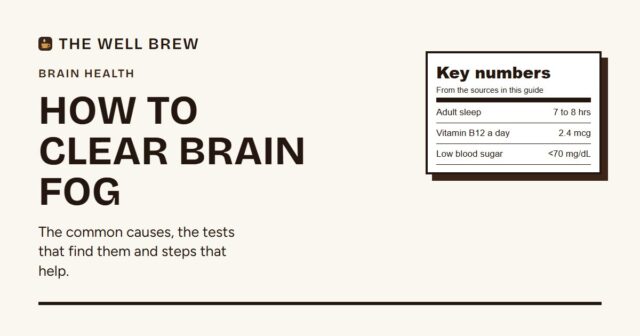
Brain fog is a symptom of something else, so it usually clears once you fix the cause. Start with seven…
By Maya Ellison · Oct 27, 2026
Most pink eye clears on its own. You can treat it at home with cold compresses, artificial tears, frequent hand…
By Maya Ellison · Oct 27, 2026
To improve gut health, eat 22 to 34 grams of fiber a day from many different plants, add fermented foods…
By Maya Ellison · Oct 27, 2026
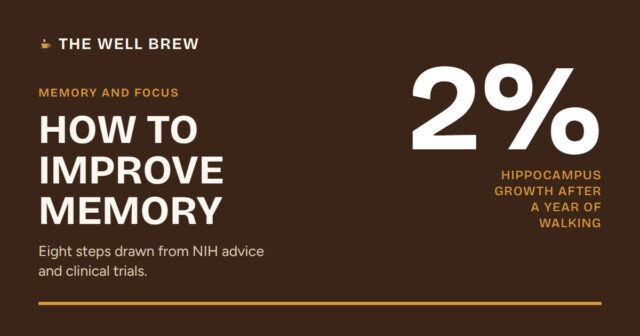
The best-tested ways to improve memory are regular aerobic exercise, 7 to 9 hours of sleep, testing yourself instead of…
By Maya Ellison · Oct 27, 2026

Maya Ellison
Reviews Editor
Maya Ellison is the Reviews Editor at The Well Brew, a slow, plain-language supplement review blog for everyday adults. Maya reads each label in full, sets every dose beside the amounts used in human studies, grades the research with sources such as the NIH Office of Dietary Supplements and NCCIH, and works out the real cost and refund fine print. Maya has no medical credentials and is not a doctor, dietitian, nurse or pharmacist. Reviews give pros, cons and who a product suits, never scores.
No. We do not personally test, take or lab-check the products we write about. We read the label, the sales page, the order terms and public research from NIH, FDA and FTC, and we link the source behind each point.
No, and you never will. A single number hides the parts that matter. Each review lays out the ingredients, how strong the research is for each one, the real cost per day and the refund terms, so you can weigh them yourself.
Some pages carry affiliate links. If you buy through one, we may earn a commission at no extra cost to you. Pages with these links say so near the top. A commission never changes an evidence grade or removes a red flag.
Maya Ellison, our Reviews Editor, writes and checks them. Maya has no medical credentials and does not give medical advice. The work is reading labels, research summaries and order terms closely, then explaining them in plain words.
No. Our reviews explain labels, research and order terms. They cannot tell you what is right for your body. Talk with a doctor or pharmacist first, especially if you take medicines, are pregnant or nursing, or have surgery planned.
We use four plain grades: Moderate, Limited, Weak and Avoid. Each one rests on what the NCCIH or NIH Office of Dietary Supplements page for that ingredient says, and that page is linked right beside the grade so you can check it.
Yes. Send us the product name and where you saw the ad through our contact page. We cannot cover every request. A request from a seller never buys a review, a link or a kinder write-up.
Read the label first. Then decide.
Slow, plain-language supplement reviews. We read the label, compare each dose with the research and work out the real cost. Edited by Maya Ellison.
The Well Brew is general information, not medical advice. Dietary supplements are not reviewed by the FDA for safety or effectiveness before they are sold. Talk to your doctor before you start, stop or combine supplements. Some links are affiliate links: if you buy through them we may earn a commission at no extra cost to you, and it never changes what we report.